
When Vacation Doesn't Feel Like a Vacation:
Finding Presence When Family Life Feels Overwhelming
July 2026 Newsletter

For many families, summer is painted as the season of sunshine, carefree adventures, and making lifelong memories.
And while those moments certainly exist, so do the meltdowns. The sibling arguments. The overtired children. The skipped naps. The long car rides. The sensory overload. The disrupted routines. The packing, unpacking, planning, spending, cooking, cleaning, and managing everyone’s emotions—often while trying to manage your own.
If you’ve ever returned from vacation feeling like you need another vacation, you’re in very good company. As a psychologist, one of the most common themes I hear from parents this time of year is:
“Why am I so overwhelmed? I should be enjoying this.”
Let’s gently defuse from that thought.
Your Brain Loves Predictability:
Our nervous systems are designed to appreciate familiarity. Throughout most of the year, our days tend to have some rhythm. Wake-up times. School. Work. Bedtime. Even if life feels busy, there is often a predictable structure. Summer has a way of disrupting nearly all of it. Children are home more often. Bedtimes become later. Vacations require constant flexibility. Meals happen at different times. Work schedules shift. There are more decisions to make, more transitions to navigate, and fewer opportunities for quiet. Even positive changes ask something of our nervous systems. This isn’t a sign that you’re doing summer “wrong.”
It’s simply what human nervous systems do when routines change.

Two Things Can Be True:
One of my favorite Acceptance and Commitment Therapy (ACT) reminders is this:
Two seemingly opposite experiences can exist at the same time.
You can love your children…
and feel touched out.
You can be incredibly grateful for a family vacation…
and desperately miss your own bed.
You can recognize your privilege…
and still feel exhausted.
You can create beautiful memories…
and have moments you wish would end.
Our minds often convince us that one experience invalidates the other. They don’t.
Holding space for both is emotional flexibility and emotional maturity.
The Vacation We Imagine vs. The Vacation We Actually Have:
Many of us unknowingly pack expectations alongside our swimsuits.
“We’re supposed to be making memories.”
“This should be relaxing.”
“Everyone should be happy.”
“I spent so much money—we need to enjoy every minute.”
The problem with expectations is that reality rarely signs the same contract. Vacation with small children is rarely peaceful.
It is often loud. Messy. Chaotic. Sticky. Interruptive. It asks parents to be “on” in unfamiliar environments while meeting the needs of little humans whose nervous systems are still developing.
If your vacation doesn’t resemble the highlight reels you see TikTok or Instagram reels, it doesn’t mean you’re failing.
It means you’re living real life.
Where Attention Goes, Experience Follows
One of the central ideas in ACT is that while we cannot always control what shows up internally—our thoughts, emotions, worries, frustrations—we can gently choose where we place our attention. When overwhelm arrives, our minds naturally begin scanning for problems 🡪 The line is too long. The kids won’t stop arguing. The hotel room is a mess. Everyone is hungry again. Our attention narrows toward everything that’s going wrong.
Instead of asking,
“How do I stop feeling overwhelmed?”
Try asking,
“Where would I like to place my attention right now?”
Perhaps it’s noticing:
- the sound of your child’s contagious laugh
- the warmth of the sun on your shoulders
- the feeling of your feet in the sand
- the sound of waves
- the smell of ocean air
- your partner smiling at your children
- your children finally having a moment of connection
- the smell of sunscreen that will someday remind you of this season of life
- the look on your youngest child’s face when they go on their first ride; eat their first vanilla/chocolate twist SoftServe ice cream in a cone with rainbow sprinkles; try their first funnel cake; win their first prize on the wheel game
This isn’t pretending the hard parts don’t exist.
It’s intentionally widening your attention so they aren’t the only thing you notice.
Come Back Into Your Body
When our nervous system becomes activated, our minds become noisy. Thinking harder rarely helps. Instead, gently reconnect with your body.
You might try:
- Feeling both feet firmly against the ground.
- Relaxing your jaw and allowing your shoulders to soften.
- Taking one slow inhale and an even slower exhale.
- Looking around and identifying five things you can see.
- Splashing cool water on your hands or face.
- Holding your child’s hand and noticing its warmth.
- Taking thirty seconds to notice the sounds around you.
- Dancing to the beat of your own drum.
These tiny moments tell your nervous system,
“I’m here.”
“I’m safe enough.”
“I don’t have to solve everything right this second.”
Sometimes regulation doesn’t require escaping the moment.
Sometimes it simply requires returning to it.
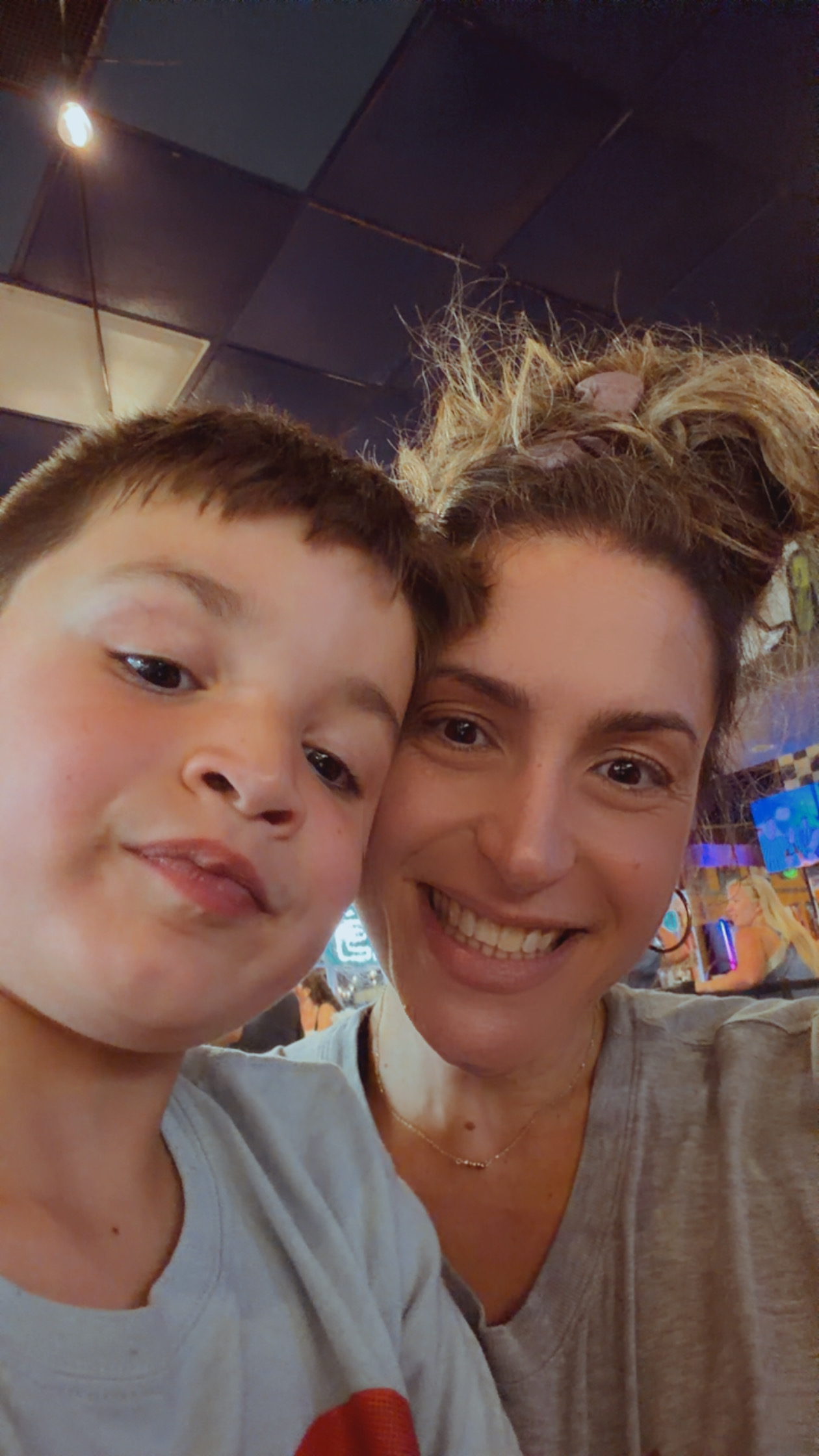
When Your Inner Critic Starts Shouting
Perhaps the loudest voice on vacation isn’t coming from your children.
It’s coming from inside.
“Other parents would enjoy this.”
“You should be more grateful.”
“You’re ruining the vacation.”
“What’s wrong with you?”
Our inner critic often believes shame is motivating. In reality, shame usually narrows us even further. Instead of arguing with that voice, notice it.
You might simply say,
“I’m noticing my mind is telling me I should be happier.”
Or,
“There’s my inner critic trying to motivate me with guilt again.”
Notice that your mind is generating thoughts.
Thoughts are experiences.
They are not commands.
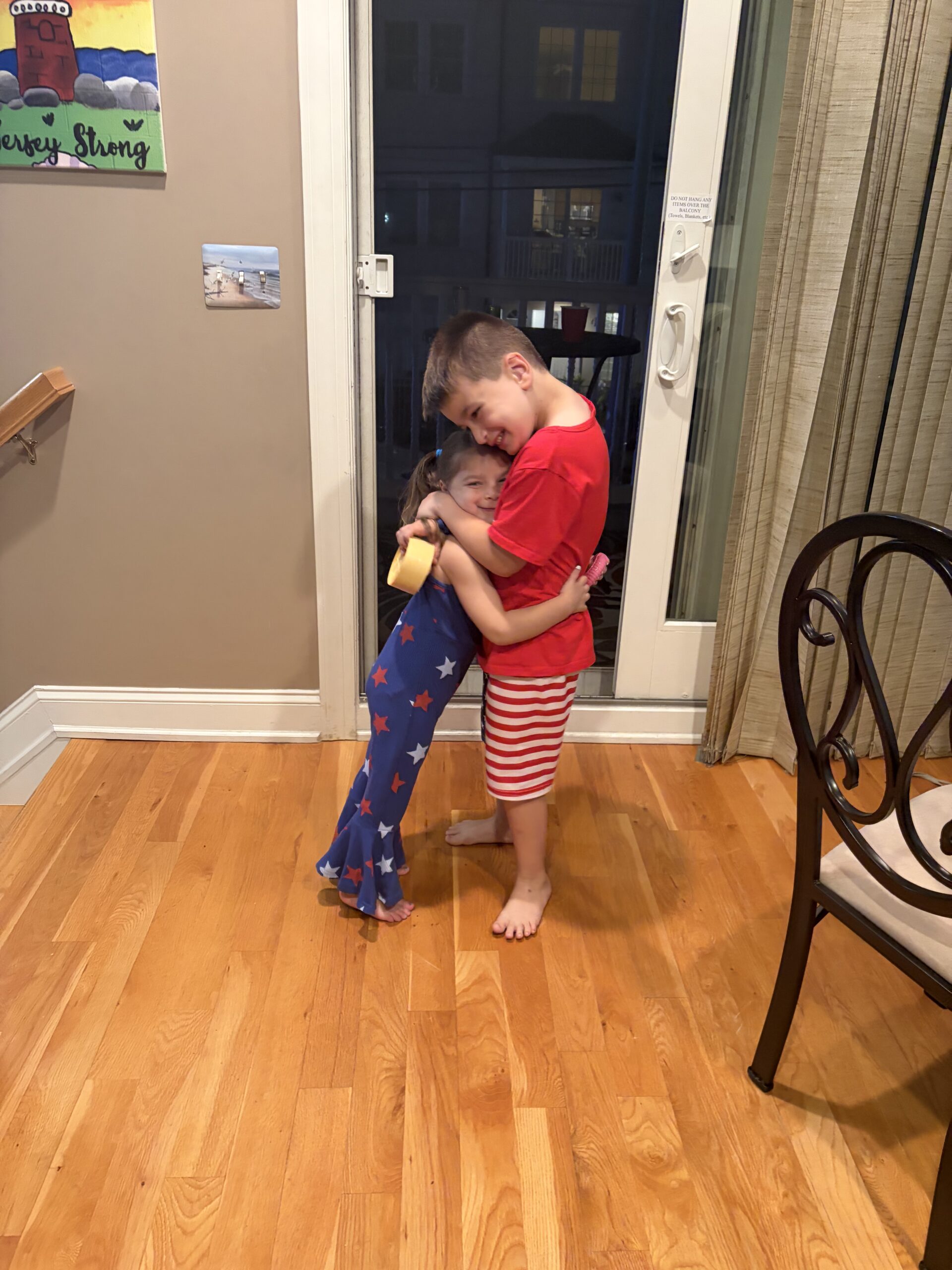
Self-Compassion Doesn’t Mean Loving Every Moment
Self-compassion is not convincing yourself everything is wonderful. It is responding to yourself the way you would respond to someone you deeply love.
Imagine your closest friend saying,
“I’m overwhelmed. I love my kids, but today has been so hard.”
Would you respond,
“You should be more grateful.”
Probably not.
You might say,
“Of course you’re overwhelmed. You’re carrying a lot.”
“Anyone would find this difficult.”
“You’re doing the best you can with what today is asking of you.”
Can you offer yourself the same kindness?
A simple ACT-friendly phrase might be:
“This is a hard moment. Many parents feel this way. I can make room for this feeling while continuing to show up as the parent I want to be.”
Notice there is no requirement to eliminate the overwhelm before moving toward what matters.
Presence Over Perfection
Years from now, your children likely won’t remember whether every meal went smoothly or whether everyone stayed cheerful all day. They will remember your presence. Not perfect presence. Human presence. The kind that repairs after snapping. The kind that apologizes. The kind that laughs after crying. The kind that keeps coming back. Because that is what psychological flexibility and emotional maturity look like. Not feeling calm all the time. But repeatedly returning to the present moment, to your values, and to the people who matter most—even when your nervous system is asking you to do otherwise.
A Gentle Reflection
As you move through the rest of this summer, consider asking yourself:
- What is my mind trying to protect me from right now?
- What sensations do I notice in my body without trying to change them?
- Where would I like to place my attention in this moment?
- If I treated myself like someone I deeply cared about, what would I say next?
- What is one small action I can take today that reflects the kind of parent, partner, or person I want to be—even if overwhelm comes along for the ride?
Summer doesn’t have to be perfect to be meaningful.
The goal isn’t to eliminate overwhelm.
The goal is to make enough room for it that you don’t accidentally miss the moments unfolding right in front of you.


About the Author
Dr. Amanda Aster McKenna, Psy.D. is a Licensed Psychologist based in Montclair, NJ, providing both in-person and virtual therapy across all PSYPACT states (see full list here).
She specializes in Trauma-Informed Care, Acceptance and Commitment Therapy (ACT), and Compassion-Focused Therapy (CFT).
In addition to her clinical practice, Dr. McKenna is a professor of psychology at Kean University in Union, NJ — and a proud working mom to three beautiful children.
Until next month,
Your favorite enabler of Mental Wellness
The Montclair Therapist
Dr. Amanda Aster-McKenna, Psy.D.
(She/Her/Hers)
NJ Licensed Psychologist #5888, Private Practice, Montclair, NJ
Adjunct Professor, Kean University, Department of Advanced Studies in Psychology
Manager, New York City Chapter of the Association for Contextual Behavioral Science
Board Member, Mental Health Association of Essex and Morris
*Peace, Love, & Fierce Acceptance*
If you would like to sign up for my monthly newsletter, please email [email protected] to be added to the mailing list.